

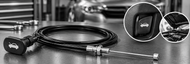
Hood Release Cable Replacement: How to Choose the Right Cable
Posted by Kyle Madsen on 18th Nov 2026
A hood release cable connects the release handle inside a vehicle to the hood latch. When the handle is pulled, the cable moves the latch and allows the hood to open. Over time, a hood release cable can become stiff, damaged, stretched, or broken, making the hood difficult or impossible to open.
Choosing the right replacement cable is important for smooth operation and proper latch engagement. The correct cable should match the vehicle or project requirements, including its length, routing, handle configuration, housing style, and connection to the latch.
What Is a Hood Release Cable?
A hood release cable is a mechanical cable assembly used to remotely operate a hood latch. It normally consists of an inner cable, outer housing, handle, and connection hardware.
The cable allows the release handle to be installed away from the hood latch. This makes it useful for standard vehicles, classic cars, street rods, custom builds, and other applications where a remote hood release is required.
Control Cables offers hood and deck release cables in several configurations and can also build cables for applications where a standard replacement is difficult to find.
Signs You Need a Hood Release Cable Replacement
A damaged cable does not always fail suddenly. Several signs can indicate that replacement is needed:
- The hood release handle feels unusually stiff.
- The handle pulls but the hood does not release.
- The cable has visible damage or corrosion.
- The inner cable does not move smoothly through the housing.
- The cable housing is kinked or crushed.
- The hood release works inconsistently.
- The cable has broken completely.
If the cable requires excessive force, avoid repeatedly pulling the handle. Excessive force can damage the handle, cable or latch.
How to Choose the Right Hood Release Cable
1. Check the Cable Length
Length is one of the first things to consider when selecting a replacement. The cable needs enough length to follow the required path from the release handle to the hood latch without being excessively loose.
A cable that is too short may not reach the latch correctly. A cable that is unnecessarily long can create extra loops or bends that may affect operation.
Before ordering, consider the actual routing path through the vehicle rather than relying only on the vehicle's overall dimensions.
2. Consider the Cable Routing
The routing path can have a major effect on cable performance. Avoid sharp bends, tight turns, and areas close to components that generate excessive heat.
Control Cables' installation instructions specifically recommend avoiding severe bends and heat sources to help promote longer cable life. The housing should also be secured along the routing path with appropriate clamps.
A smooth and supported routing path helps the inner cable move with less resistance.
3. Match the Handle and Cable Configuration
Not every hood release system uses the same handle arrangement. Some applications use a single remote lever, while others may require a different handle or cable configuration.
Control Cables offers hood and deck release options with different configurations, including single remote aluminum levers and multi-use cables with different handle choices.
When replacing a cable, make sure the handle and cable assembly are compatible with the way your vehicle or project is designed.
4. Check the Latch Connection
The cable must connect securely to the hood latch. The end of the inner cable and the required attachment hardware should match the latch mechanism.
During installation, Control Cables' instructions call for attaching the inner cable to the latch with the supplied hardware and trimming excess cable after the connection is completed.
Before selecting a replacement, inspect how the existing cable connects to the latch. This can help prevent compatibility problems during installation.
5. Consider the Cable Construction
Different applications may require different cable constructions. For example, Control Cables offers flexible multi-use cables as well as stainless-steel-braided options in various lengths.
The right construction depends on the application, routing space, operating environment, and required flexibility. A cable used in a custom or performance vehicle may have different requirements from a basic replacement.
What If Your Original Hood Cable Is No Longer Available?
Older vehicles, classic cars, street rods and custom projects can be difficult because the original hood release cable may no longer be manufactured.
In these situations, a direct off-the-shelf replacement may not be the only option. Control Cables states that it can build many types of hood and deck release cables, including cables for applications that are out of production. Customers can provide a photo of the existing cable to help identify available options.
This can be especially useful for restoration and custom vehicle projects where finding an exact factory replacement is difficult.
How to Install a Hood Release Cable
Once the correct cable has been selected, installation should focus on smooth routing and secure attachment.
The general process includes:
- Position the release handle.
- Route the cable toward the hood latch.
- Avoid sharp bends and heat sources.
- Secure the cable housing with clamps.
- Connect the inner cable to the latch.
- Check the handle and latch operation.
- Trim excess inner cable if required.
Always follow the installation instructions supplied with the specific cable.
Find the Right Hood Release Cable for Your Application
A good hood release cable should provide the correct length, routing flexibility, handle configuration, and latch connection for your setup. For standard replacements, classic vehicles, street rods, and custom projects, selecting the cable based on the actual application is more reliable than choosing by length alone.
Control Cables offers a range of Hood & Deck Release / Multi-Use Cables, including different lengths, handle configurations, and cable constructions. For applications where a standard cable is unavailable, custom cable solutions may also be available.
If you are replacing a worn hood release cable or building a custom release system, review the available configurations and choose a cable that matches your vehicle's routing and connection requirements.